Wool and Cashmere Can Often Be Washed at Home
Many wool and cashmere sweaters, socks, throws, and other knitwear can be washed at home, by hand or in your machine, as long as you use cool water, an enzyme-free wool detergent, and a gentle touch (including skipping the dryer). This saves dry-cleaning costs and avoids the harsh chemicals that can linger in clothes after cleaning.
This guide covers everything in one place: how to tell if your wool is washable; how often to wash it; how to choose a detergent; step-by-step hand and machine washing directions; how to dry it without shrinking or stretching it; and how to care for knitwear between washes and in storage.
How Should You Wash Wool? Start With the Care Label
The care label is the first and most important place to check, because not all wool is washable. Washable wool has been specially treated to resist felting and shrinking in the wash, and it is labeled as such. Sweaters, wool socks, and lightweight throw blankets are usually fine to wash at home.
Look for these symbols alongside any written instructions (for a full breakdown, see our
guide to laundry care symbols):
|
Symbol
|
What it means
|
|
Tub with an X through it
|
Do not wash
|
|
Tub with a hand
|
Hand wash
|
|
Tub with two lines beneath
|
Machine wash on a gentle or delicate cycle
|
|
One dot
|
Wash in cool water (30°C / 86°F)
|
|
Two dots
|
Wash in lukewarm water (40°C / 104°F)
|
|
Empty circle
|
Dry clean
|
When to skip washing entirely:
Some wool and cashmere items should never be laundered at home:
-
Lined or structured pieces. Wool pants, skirts, blazers, and coats are usually dry clean only, even if the fiber itself is washable.
-
Embellished sweaters. Sequins and similar details usually mean they're better taken to the dry cleaners.
-
Very heavy items. If the label says machine washable but the piece is bulky, take it to a laundromat. Commercial front-loaders are built to handle heavy loads without straining your home machine.
If the label says dry clean only, take it to the dry cleaners and don't attempt to wash it.
How Often Should You Wash Wool?
Wash wool as infrequently as possible. Thanks to the lanolin in wool fibers, wool is naturally antimicrobial and resists odor and body oils better than cotton or polyester, so most wool and cashmere sweaters do not need frequent washing. As a general guide, wash cashmere sweaters at most twice a season, and wash wool or wool-and-cashmere sweaters no more than three times per season. Washing too often accelerates wear on both the fabric and the seams and stitching.
Common sense is your best guide. Your body constantly sheds oils and skin cells, so a sweater worn as a first or only layer will need washing sooner than one worn over another layer. Wool socks are the exception to the "wash rarely" rule: wash those after each wear.
To stretch the time between washes, air your wool clothing right after you wear it:
- Hang the sweater outside, or indoors in a dry spot, for a few hours. A cool, low-humidity day is ideal.
- Or hang it in the bathroom during a steamy shower (or two). The steam helps the fibers release odor.
- If the steam leaves it damp, lay it on a clean, dry towel or drying rack until it's dry.
- Keep it out of direct sunlight, which can fade dye and weaken fibers.
A good rule: air out after each wear, spot-clean spills as they happen, and wash when the sweater looks or smells like it needs it, with the exact timing also coming down to personal preference.
Prep Your Wool for Washing
A few minutes of prep prevents most wash-day damage.
-
Re-read the care label. Each garment can have its own requirements, and different wools behave differently: merino is more delicate than lambswool or Shetland.
-
Inspect the garment. Check for stains, spills, and spots.
-
Pre-treat stains. Gently rub a small amount of mild, enzyme-free detergent into the stain before washing. For a stubborn stain, you can pre-treat with a small amount of enzyme detergent, but only occasionally and only after testing on an inconspicuous spot. See our
stain removal guide for specific stains.
-
Sort. Wash wool alone or in a small, wool-only load, with similar colors together.
Choosing the Right Detergent for Wool
Wool and cashmere are made from the fleece of sheep and goats, and their fibers are protein-based; this is why they react badly to heat, agitation, and the wrong detergent. Never use a standard commercial detergent or fabric softener on wool or cashmere.Instead, choose a gentle, pH-neutral, enzyme-free detergent made for wool and other delicates like
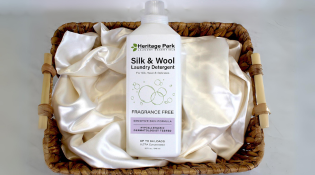
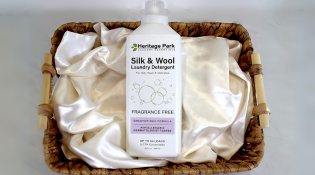
Heritage Park Silk and Wool.
Why wool needs a special detergent
Wool is a protein-based fiber, like silk, cashmere, alpaca, fur, leather, and feathers. That protein structure gives wool its warmth, breathability, and moisture-wicking ability and makes it vulnerable. Standard detergents contain harsh chemicals that strip moisture and leave wool dry and brittle.
Why enzymes are a problem
Enzyme (or "biological") detergents are designed to break down protein-based stains such as egg, dairy, gravy, grass, and blood. Because wool is itself a protein, regular washing with enzymes slowly degrades the fiber, leaving it weaker and more prone to rips, pulls, and pilling. Learn more in our post on
how laundry enzymes work.
The one exception: occasional spot treatment of a stubborn stain with a small amount of enzyme detergent, tested first on a hidden area. Don't use it for whole-garment washing.
Never use fabric softener
Fabric softener leaves a waxy buildup that coats natural fibers and damages wool. It isn't good for luxury linens or your washing machine either.
What a good wool detergent does
A good wool detergent helps keep wool and cashmere looking and feeling good.
-
Preserves softness. Gentle formulas don't strip the natural moisture that keeps wool plush through repeated washing.
-
Protects the fiber. No enzymes means fewer weak spots, snags, and pills.
-
Helps prevent shrinking. Wool shrinks with harsh chemicals and agitation, and the right detergent lowers the chemical side of that risk.
-
Keeps color vibrant. Harsh detergents can fade even high-quality wool.
-
Suits sensitive skin. Heritage Park Silk & Wool Delicates Detergent is
lab-certified hypoallergenic and pediatrician- and dermatologist tested. For individuals with highly reactive skin, we recommend the Fragrance-Free variety.
Eight things to look for when you shop
-
Gentle formulation. Look for products labeled "wool detergent" or a mild detergent that is explicitly safe for delicates and protein fibers.
-
No harsh chemicals. Read labels. Heritage Park Silk & Wool Delicates Detergent, for example, contains no dyes, phosphates, sulfates, chlorine, bleach, or optical brighteners.
-
Short, natural ingredient list. You should be able to find every ingredient on the bottle and the company's website.
-
Enzyme-free. See above.
-
Neutral pH. Better for both fabric and skin. Here's
why pH matters in detergent.
-
Concentrated liquid. Liquids dissolve better in cool water, and concentrates use less water and plastic.
-
Versatile. One protein-fiber detergent also works on silk, cashmere, alpaca, and down, so you don't need a wool-only product.
-
Fragrance-free or hypoallergenic options. Fragrance can irritate sensitive skin. See our
hypoallergenic detergent guide.
Heritage Park Silk & Wool Delicates Detergent is plant-based, pH-neutral, and enzyme-free. It is dermatologist- and lab-tested as hypoallergenic and is
EWG Verified, SkinSAFE Certified Trusted Choice, and
EPA Safer Choice certified. Heritage Park Silk & Wool Delicates Detergent is also Leaping Bunny certified as cruelty-free. It is available in Fragrance Free, Lavender Mist, and Spring Magnolia.
SkinSAFE Certified Trusted Choice: This certification recognizes products reviewed for their suitability for sensitive skin. Earning this certification requires manufacturers to provide scientific and clinical evidence supporting product use and safety. Heritage Park Sensitive Skin All-Purpose and Silk & Wool Delicates detergents hold this credential alongside EWG VERIFIED and EPA Safer Choice certification, supporting our promise of gentle laundry care and proven cleaning performance.
Wool doesn't ask for much, but it does ask you to be gentle. Cool water, a detergent made for protein fibers, and no wringing or tumble drying will keep a good sweater looking right for years.
How to Hand Wash Wool
Hand washing wool is the gentlest method and the best choice for a single sweater, cashmere, or wool socks. Follow these steps for successful hand washing:
-
Read the care label and follow it.
-
Fill a basin, bucket, or utility sink with cool or lukewarm water. Never use hot water on wool.
-
Add a small amount of wool detergent. With Heritage Park Silk & Wool, that's about 1/2 to 1 capful for a sweater. Swish to dissolve it fully before adding the garment.
-
Turn the item inside out, submerge it, and swish it gently. Don't scrub, rub, or wring, which can cause felting or distortion.
- Soak for no more than 10 minutes.
-
Rinse thoroughly in cool water until the detergent is gone.
-
Gently press the garment to squeeze out excess water; don't wring. Pat the garment with a clean towel or roll it up in one. Sleeves and cuffs often hold the most water, so blot them again rather than twisting.
Then move on to drying right away so the wet garment isn't left sitting.
How to Machine Wash Wool
Machine washing works for wool labeled machine washable, as long as you use the gentlest settings and protect the garment. Washable cashmere can go in the machine only if the label approves it and you use very gentle settings.
-
Read the care label and follow it.
-
Pre-treat stains with a wool-safe stain remover or a dab of wool detergent.
-
Wash a small, wool-only load, sorted by color. Don't overload the machine (see our
load size guide).
-
Turn items inside out to reduce friction and pilling.
-
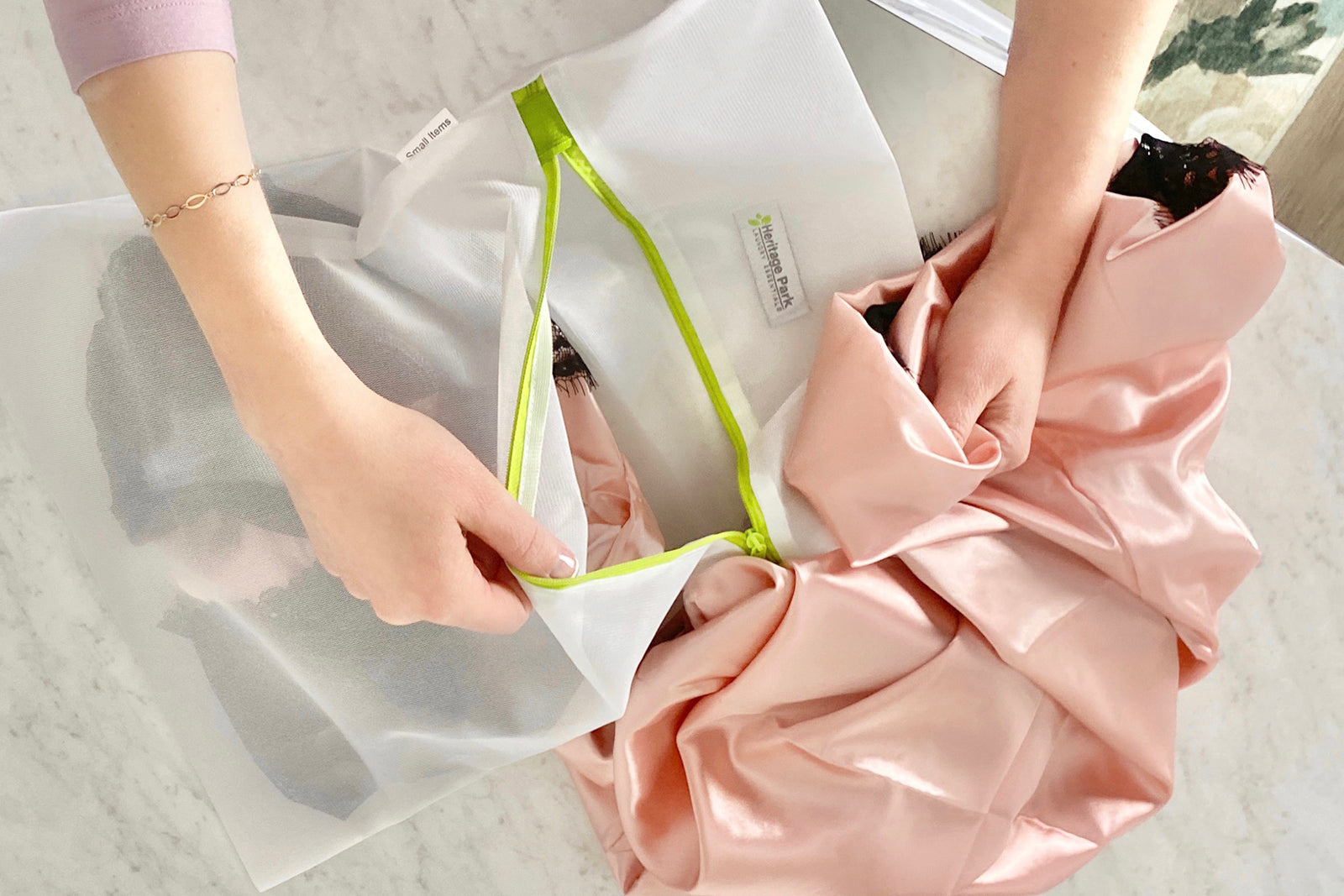
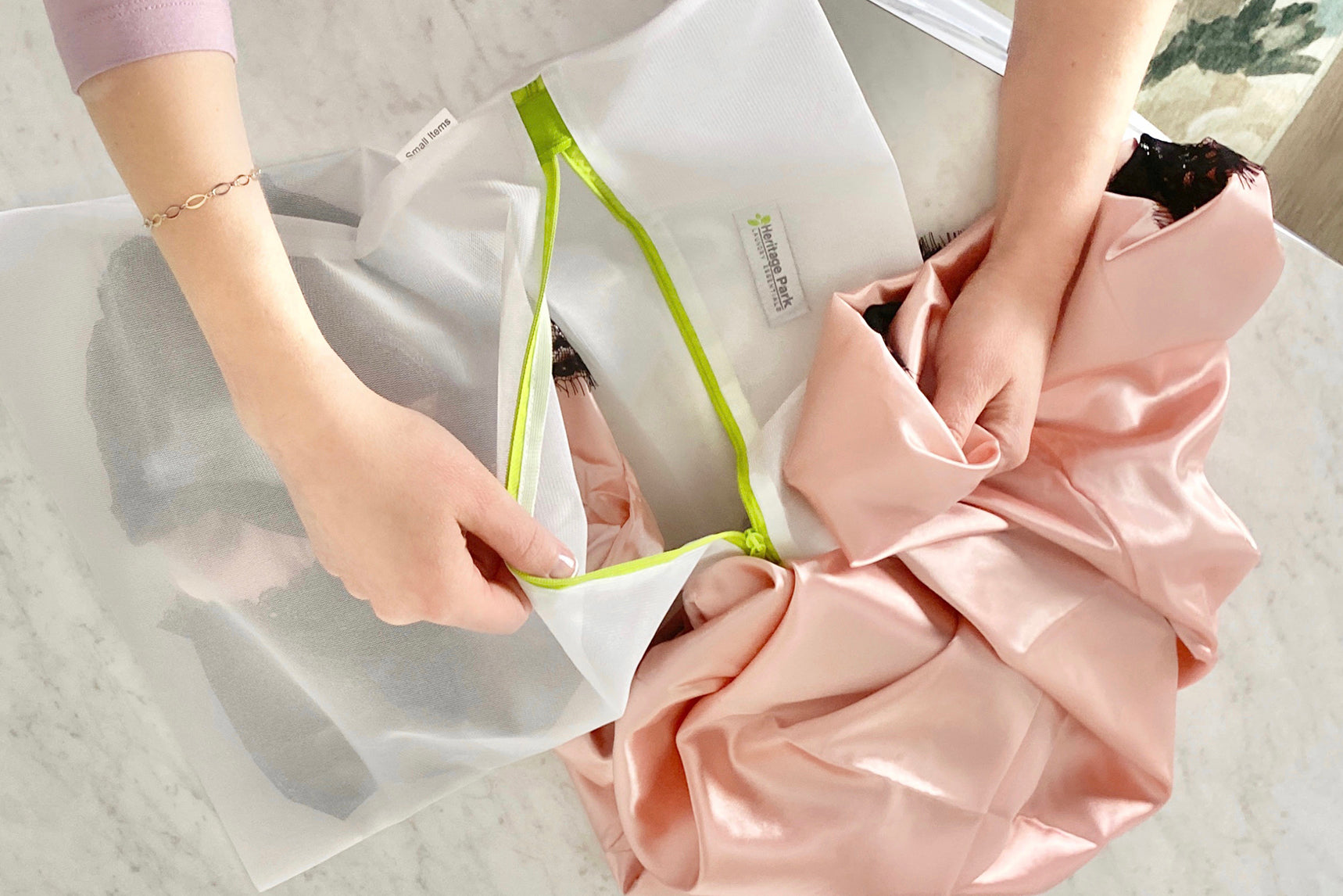
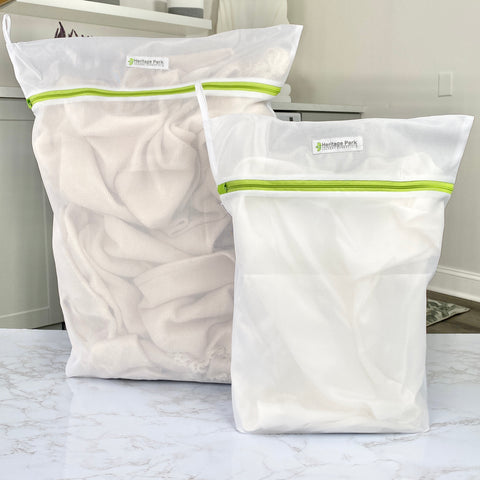
Use a fine-mesh laundry bag to protect against snags, abrasion, and burrs inside the drum. You can put several socks in one bag. Here's more on
whether to use a mesh bag for delicates.
-
Choose the wool, delicate, or hand-wash cycle, with cool water. If you're unsure what your machine's settings do, see our
guide to wash cycles and settings.
-
Add the right amount of detergent. Do not use a standard detergent; use the right gentle formula instead. With Heritage Park Silk & Wool, use 1 cap for a single item. For a larger wool load, use 2 caps in a front loader or 3 in a top loader.
-
Use a cold-water rinse, and add a second rinse if needed to remove all detergent.
- Never use fabric softener or bleach.
-
Don't wring out the items. Press excess water between towels if needed and follow the drying steps below.
Special Notes for Merino, Cashmere, Socks and Blankets
The core method is the same for every washable wool, but a few fibers and items have quirks.
Merino Wool
Merino comes from Merino sheep and is uniquely fine: most merino fibers are less than half the diameter of a human hair, which is why it feels so soft. It resists odor, regulates temperature, makes a great base layer, and is biodegradable.
Merino is more delicate than lambswool or shetland, so follow the label closely and lean on airing out between wears. Structured or lined merino pieces such as jackets and pants usually need dry cleaning. Sweaters, socks, and blankets are often washable. As with all wool, never put merino in the dryer. Any heat can shrink it dramatically.
Cashmere
Cashmere is a protein fiber from goats and follows the same rules as wool: enzyme-free detergent, cool water, no wringing, and flat drying. It is more delicate than most wool, so hand washing is the safest choice. Many cashmere garments do not need frequent washing, and cashmere sweaters should be washed only twice a season at most. Always read the care label before washing or storing cashmere.
Wool Socks
Wool socks tolerate a bit more than sweaters. You can agitate them somewhat more firmly and soak them a little longer. Wash them after each wear (they're the one wool item that doesn't get the "wash rarely" rule). You can put several pairs in one mesh bag.
Wool Blankets and Throws
Lightweight throws are often washable. Check the label, use a machine large enough that the blanket moves freely, or take bulky blankets to a laundromat. After washing, drape the blanket over a clothesline or drying rack out of direct sunlight.
How to Dry Wool
Never put wool or cashmere in the dryer. Heat makes wool fibers contract, and the damage is irreversible; even wool blends will shrink. Dry it flat instead.
DO:
Roll it in a towel first. Lay the wet garment on a clean, light-colored towel, then roll it up and press gently to remove excess water.
Dry flat. Lay it on a clean, dry towel or a mesh drying rack. Turn it over and, if the first towel gets damp, move it to a fresh towel so it dries evenly.
Reshape it. Gently stretch the garment back to its original shape while it dries.
Keep it out of direct sunlight. Sun fades wool dyes and weakens fibers.
Drape blankets over a clothesline or rack, away from direct sun.
DON’T:
Don't use the dryer.
Don't wring. It distorts the fibers and the shape.
Don't hang a wet sweater by the shoulders. The weight will stretch it out of shape, cardigans especially. If you must use a hanger, drape the sweater over the middle of it.
Don't use a heat source. Space heaters and radiators dry wool unevenly and are a fire hazard.
Caring for Wool Between Washes
Good habits between washes keep wool looking and feeling better for longer.
Air it Out
Hang or drape the item in a dry place out of direct sunlight for a few hours. Outdoors on a cool, low-humidity day is best, but an indoor air-out works in bad weather. This is especially effective for sweaters and blankets, and fresh air helps wool and cashmere release odor between washes.
Spot Clean Promptly
Dab spills with wool detergent and a soft cloth. For a persistent stain you can try a small amount of enzyme-based detergent, but use it sparingly and test a hidden spot first.
Remove Pills
Wool tends to pill where there's friction. Use a wool brush or de-pilling comb to remove the bobbles.
Don’t Over-Wash
Frequent washing wears out fabric, seams, and stitching faster than anything else, and with natural fibers you may not need to wash after every wear.
How to Store Wool Sweaters and Blankets
Wash wool and cashmere before seasonal storage, then store them folded in a cool, dry, dark place. Moths are drawn to body oils and food residue, so proper cleaning helps keep garments in pristine condition while stored.
-
Fold, don't hang. Hanging stretches shoulders. This goes for cotton sweaters too.
- Use breathable cotton storage bags. Breathable cotton or cloth garment bags protect against dust and moths during long-term storage.
-
Add cedar balls or lavender. Cedar balls, blocks, chips, or sachets, or lavender sachets, act as natural moth repellents and help keep wool smelling fresh.
-
Avoid plastic bags. Plastic traps moisture and can lead to mildew.
-
Keep it dry and out of the sun, including socks and blankets.
Care for Your Fine Washables with Heritage Park
At Heritage Park, we’ve made it our business to offer the finest, gentlest detergent and laundry products, including those made for delicate natural fibers like wool and cashmere. Our team of laundry experts is available to answer any questions you have about our products or fabric care. Give us a call at (800) 977-1841 or email us at
info@hplaundry.com. We are here to help!