The Allergy Season Laundry Problem Nobody Talks About
For allergy sufferers with sensitive skin, choosing the right sensitive skin detergent isn't just a laundry preference; it's a health decision that becomes especially urgent every spring and fall. Seasonal allergies are relentless enough on their own: the sneezing, the itching, the congestion that follows you from morning to night. But what many people don't realize is that the fix their allergist recommends — wash everything more often — can inadvertently create a new problem for skin that's already reactive.
Irritating Pollen or Irritating Detergent: Two Bad Options
Pollen clings to clothing. Dust mites thrive in bedding. Every time you come in from outside during high pollen season and settle onto the couch, sleep on unwashed sheets, or press your face into a pillowcase you haven't changed in a week, you're reintroducing the very allergens you've been trying to avoid. Allergists consistently recommend showering before bed to avoid transferring pollen from your hair and skin to your pillow and washing bedding weekly, or more frequently, during peak allergy months.
The problem is what happens when you wash with a
conventional laundry detergent. Most detergents leave residue: Fragrance molecules. Optical brighteners. Preservatives. Dyes. These don't fully rinse away in a standard cycle, and they press against your skin every time you wear those clothes or sleep on those sheets. For anyone with sensitive skin, skin sensitivities, or conditions like eczema, this is trading one irritant for another.
The Hidden Harm in Most Laundry Detergents
Understanding what's in a conventional detergent explains a lot about why
skin reacts to detergent and laundered fabric. The ingredients most associated with skin irritation aren't always the ones you'd expect.
Fragrance is the most common culprit. A single "fresh scent" designation in a detergent can represent dozens of undisclosed chemical compounds. For someone with sensitive skin or fragrance sensitivity, even a light scent can cause contact dermatitis, itching, or a rash. Fragrance-free is the only designation that fully protects skin from this class of irritants.
Optical brighteners are UV-reactive chemicals that coat fabric fibers to make whites appear brighter under light. They serve no cleaning function. They remain in the fabric after washing — against your skin. For eczema-prone skin and anyone who reacts to residue, optical brighteners are a silent but consistent irritant.
Dyes are another purely cosmetic addition. Artificial colors make a liquid laundry detergent look a certain way in the bottle — they have no benefit for cleaning, but they're a documented cause of skin irritation for people with reactive or sensitive skin.
Preservatives, particularly from the isothiazolinone class (methylisothiazolinone and methylchloroisothiazolinone), are widely cited in dermatology literature as causes of allergic contact dermatitis. These preservatives sometimes appear in detergents that are specifically marketed as gentle formulas — which is exactly why certifications matter more than label language.
Fabric softener should be avoided entirely for sensitive skin. Despite its name, most fabric softeners contain some of the heaviest fragrance loads of any laundry product, plus coating agents that cling to fabric fibers long after the dryer cycle ends.
What a Certified Sensitive Skin Detergent Should Look Like
The language around sensitive skin in the laundry aisle is thick with marketing. "Free and clear." "Gentle formula." "Natural." These phrases mean different things depending on the brand using them (and in many cases, they mean very little).
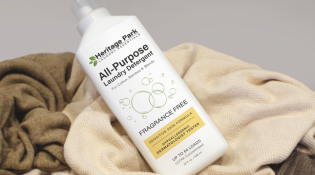
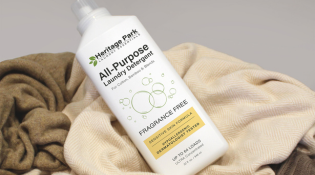
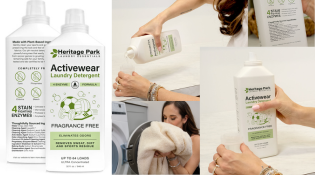
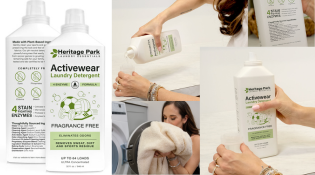
Not so with Heritage Park All-Purpose Sensitive Skin Detergent. This pH-neutral, gentle liquid detergent is made with the goal of protecting sensitive skin without sacrificing cleaning power:
Fragrance-free — Not "unscented." Unscented can mean masking fragrances were added to neutralize a product's natural odor. Heritage Park Sensitive Skin Detergent contains
NO fragrances of any kind.
Dye-free — A clear liquid laundry detergent with no added colorants is the appropriate standard. A dye-free formula should be visually clear, not tinted blue or green.
No optical brighteners — This should be stated explicitly or confirmed through third-party certification. Many detergents don't make this easy to verify on the label.
Independently certified hypoallergenic — Not a self-declared claim.
Independent laboratory certification that the formula does not cause allergic reactions is meaningfully different from a brand calling its own product hypoallergenic.
EWG Verified — An active certification from the Environmental Working Group. Not a score, but a certification earned by meeting documented standards for ingredient disclosure and screening against high-concern chemical classes.
EPA Safer Choice — A third-party designation that the formula has been reviewed against EPA standards for ingredient safety.
Dermatologist tested — When paired with the certifications above, this indicates the product has been
evaluated for skin safety by qualified clinicians, not just formulated and marketed as gentle.
Heritage Park Sensitive Skin Detergent is fragrance-free, dye-free, free of optical brighteners, free of harsh preservatives, and independently certified hypoallergenic. It carries EWG Verified® and EPA Safer Choice certifications and has been both dermatologist tested and pediatrician tested.
Why Allergy Season Specifically Demands a Better Detergent
Outside of allergy season, someone with sensitive skin might manage with a conventional detergent if they're washing infrequently or double rinsing. During allergy season, that cushion disappears.
Allergists recommend
washing bedding at least weekly during peak pollen periods, and pillowcases potentially every two to three days for people with significant sensitivity. Clothes worn outdoors should be changed and washed after exposure to high pollen counts. Gym and bath towels should be laundered regularly and not left damp. If you're washing with a conventional detergent at that frequency, residue exposure compounds and the irritant dose increases with every wash.
That's the core issue: during allergy season, you need to wash more. Washing more with the wrong detergent makes sensitive skin worse, not better. A fragrance-free, dye-free, hypoallergenic liquid laundry detergent like Heritage Park Sensitive Skin isn’t a preference at this point; it’s the only option that doesn’t create a new problem while solving the original one.
Does a Gentle Formula Still Remove Allergens and Heavy Stains?
Cleaning power should never be sacrificed. And in allergy season specifically, you need to know your detergent effectively removes allergen particles — pollen, dust, and outdoor irritants — and removes stubborn stains from from fabric.
In place of harsh chemicals, Heritage Park Sensitive Skin Detergent uses a 5-enzyme system that targets a broad spectrum of soils and stains: protein-based stains, starches, fats, oils, and more. Independent lab testing confirmed stain removal performance comparable to major conventional detergents, including in cold water and hard water conditions.
An extra rinse cycle in the washing machine — which allergists frequently recommend to reduce detergent residue — works particularly well with a formula that already rinses cleanly. Because Heritage Park doesn't leave optical brightener coatings or fragrance compounds in fabric, there's less residue to contend with in the first place.
The Right Detergent for Allergy Season Is One You Can Use Daily
Tom Ceconi, President of Heritage Park Laundry Essentials, is asked this question regularly:
"During allergy season, we hear from customers who are washing their bedding two or three times a week and worried that even a gentle formula might be too much on sensitive skin. Our answer is always the same: Heritage Park was designed for exactly this kind of consistent, high-frequency use. It cleans deeply enough to remove allergens and outdoor soil, and it's gentle enough that you're not creating a skin reaction every time you run a load. For people managing both allergies and sensitive skin, that combination isn't a luxury; t's the baseline.”
Is Heritage Park Sensitive Skin Detergent Effective in Cold Water?
Yes. Heritage Park is formulated as a concentrated clear liquid laundry detergent that works effectively in cold water — important for both energy efficiency and fabric care during high-frequency washing. It works in all standard machines, including high-efficiency (HE) front-load and top-load models.
For bedding, where hot water is often recommended to eliminate dust mites, Heritage Park performs equally well at higher temperatures. The enzyme system is effective across a range of water temperatures, so your wash settings don't have to change based on what the detergent can handle.
Is Heritage Park Safe for Eczema and Super Sensitive Skin?
Heritage Park Sensitive Skin Detergent is free of the ingredients most associated with eczema flare-ups: no fragrance, no dyes, no optical brighteners, no harsh preservatives from the isothiazolinone class, no sulfates. It is independently certified hypoallergenic through laboratory testing and has been dermatologist tested.
For
eczema-prone and super sensitive skin, the critical factor is not only what a detergent contains but what it leaves behind after the rinse. Because Heritage Park rinses cleanly — no brightener coatings, no fragrance residue — the contact exposure that triggers eczema reactions is reduced at the source.
What Is Detergent Residue and Why Does It Matter for Sensitive Skin?
Detergent residue is what remains in fabric after the wash and rinse cycle. For most people, it goes unnoticed. For people with sensitive skin, it's one of the most common causes of contact dermatitis, itching, and redness that appears without an obvious trigger.
Residue accumulates from fragrance compounds that don't fully dissolve, from optical brightener coatings that bond to fibers, and from using too much detergent for your machine type. During allergy season — when you're washing more frequently and your immune system is already on alert — residue from a conventional detergent can tip the balance toward a reaction. Heritage Park Sensitive Skin Detergent is the best way to reduce that risk. The fragrance-free, dye-free liquid detergent is formulated to rinse cleanly and is made with clean, gentle ingredients that will leave your laundry clean and your skin protected.
No Compromise to Health or Cleaning Power
When it comes to the health and wellbeing of your family, there should be no compromise. You don’t have to settle for laundry that is less than pristine or itchy, irritated skin. Heritage Park Sensitive Skin formula is the laundry detergent your family deserves, in and out of allergy season. As always, the Heritage Park team is here to answer your questions about our products and laundry in general. Give us a call or use the chat window; we are here to help.